What does it take to build a submarine cable across the Arctic Ocean, and why is such a connection becoming increasingly important? These were among the questions explored at BalticNOG 2026, held on 23–24 September in Riga, Latvia.
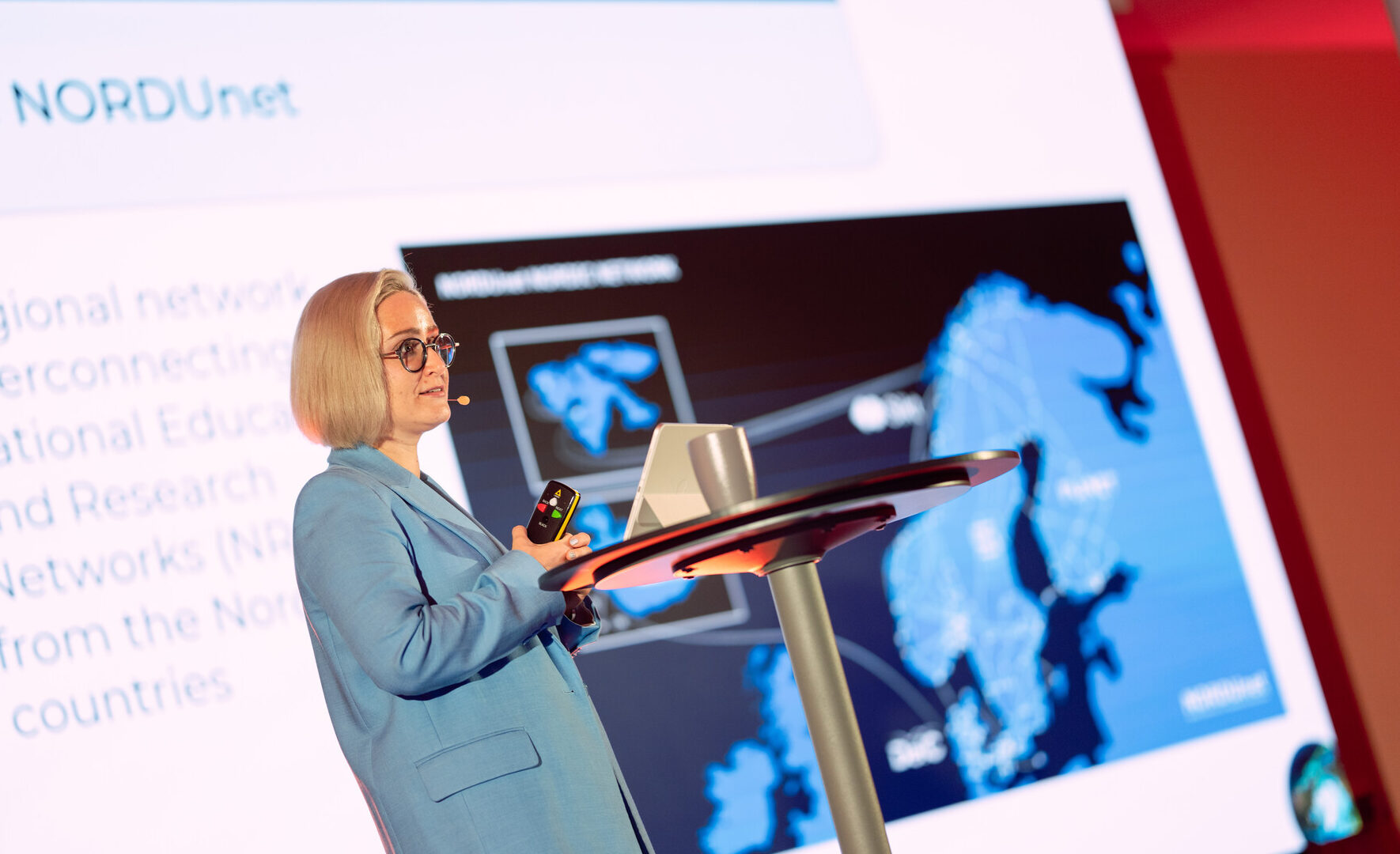
Representing Polar Connect, Ieva Muraškienė of NORDUnet delivered a keynote titled Polar Connect: Field Notes from the Ice Edge, bringing the initiative’s ambitions, engineering challenges and recent Arctic expedition experiences to the Baltic and Nordic network operator community.
The presentation explored the growing need for alternative digital infrastructure routes. With existing submarine cable connections concentrated in a limited number of corridors, recent incidents in the Baltic and Red Seas have demonstrated the importance of geographical diversity and resilience.
Polar Connect aims to establish a shorter submarine fibre-optic connection between Europe and East Asia across the Central Arctic Ocean, with connectivity to North America. Beyond the potential for reduced latency, the route would provide an alternative to existing connections and contribute to strengthening Europe’s digital resilience.
But establishing a cable across the Arctic Ocean is far from an ordinary infrastructure project.
Drawing on experiences from the Polar Connect 2026 expedition, Ieva took the audience behind the scenes of the work required to investigate a potential Arctic cable route. From seabed mapping and navigating ice-covered waters to understanding the challenges of future cable-laying operations, the presentation illustrated the scale and complexity of the undertaking.
The expedition also demonstrated how much of the expertise required for an Arctic submarine cable comes from outside the telecommunications industry. Polar researchers, marine specialists, engineers and scientists bring different perspectives and capabilities to a shared challenge. Their cooperation is essential to moving Polar Connect from concept towards technical and operational feasibility.
Another dimension of the initiative is the opportunity to combine telecommunications infrastructure with scientific observation. Fibre-optic sensing technologies could provide valuable data from one of the least accessible regions of the planet, while also supporting the monitoring and integrity of the cable system.
BalticNOG provided an opportunity to share these developments with the people who design, operate and maintain Internet infrastructure. The presentation connected the broader questions of digital resilience and infrastructure security with the practical realities of Arctic exploration, bringing together the ambition of a new connectivity corridor and the engineering work needed to make it possible.
As Polar Connect continues its seabed investigations and feasibility work, exchanges with the wider networking community remain valuable in shaping the next steps towards a new Arctic connection. Find out more about the initiative and watch the films from the 2026 expedition at polarconnect.net/media.