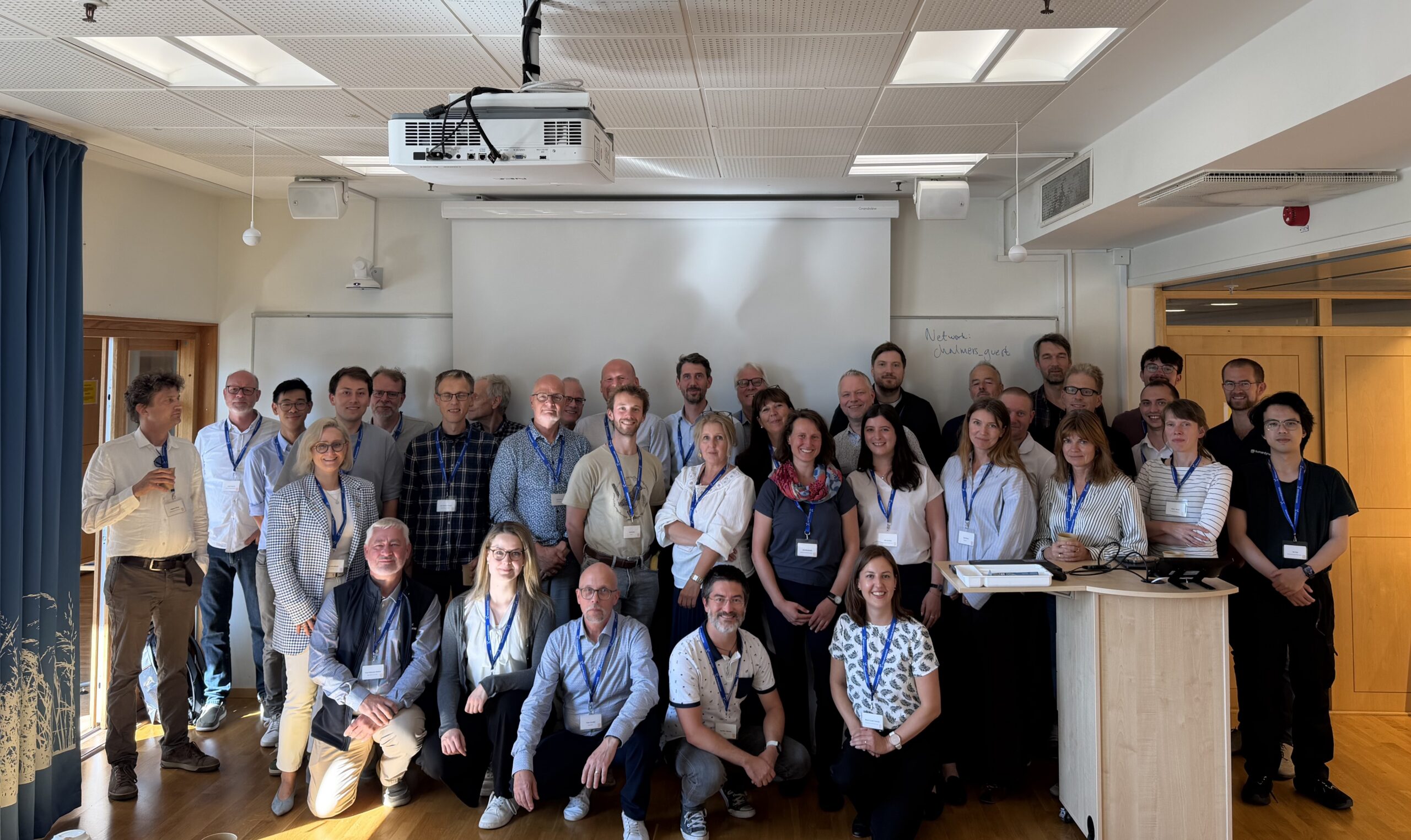
Researchers, industry experts and stakeholders gathered at Chalmers University of Technology in Gothenburg on 25 August for the Polar Connect Sensing Workshop, a one-day event exploring how the future Polar Connect submarine cable could support advanced sensing and scientific observations in the Central Arctic Ocean.
By integrating sensors and fibre-based monitoring technologies into the future cable system, Polar Connect aims to enable unprecedented data collection from one of the least observed regions on Earth. Such capabilities could support polar research, climate modelling, environmental monitoring, geosciences and early warning systems for geophysical hazards, while also driving innovation in sensor development and submarine fibre sensing.
Bringing research and industry together
The workshop brought together experts from academia, research organisations and industry to exchange knowledge, identify scientific needs and explore opportunities for future collaboration.
The morning session featured updates from the Polar Connect team alongside expert presentations by Céline Heuzé (University of Gothenburg), Magnus Karlsson (Chalmers University of Technology), Stein Sandven (NERSC), James Lindsey (Güralp Systems), Jan Kristoffer Brenne (Alcatel Submarine Networks) and Ulf Jonsell (Swedish Polar Research Secretariat).
Scientific priorities for Arctic sensing
During the afternoon discussions, participants identified several scientific priorities for sensing in the Central Arctic Ocean. These included monitoring seismically active but poorly instrumented regions, studying marine ecosystems and collecting oceanographic data to improve understanding of rapidly changing Arctic processes.
Acoustic sensing emerged as a particularly promising area for research, while pressure sensing attracted significant interest due to its potential applications in oceanography, sea-level monitoring and hazard detection. Participants also discussed the need for very accurate and long-term stable measurements in Arctic waters and the challenges associated with operating sensing systems in such a demanding environment.
Opportunities for fibre sensing technologies
A recurring theme throughout the workshop was the potential for submarine cable infrastructure to support multiple sensing technologies simultaneously. Discussions explored the capabilities of Distributed Acoustic Sensing (DAS), possibilities for fibre optic sensing across telco repeaters and future opportunities to combine several sensing methods within the same fibre pair of the submarine cable system.
The workshop highlighted how advances in fibre sensing could transform submarine cables into platforms for both communication and scientific observation.
Challenges and next steps
Participants also discussed practical challenges, including sensor calibration, long-term measurement stability, security, data management and scalability.
Discussions included the need to balance scientific ambitions for increased observational data with robust safeguards for the integrity of Polar Connect. They also underscored the importance of developing effective data management solutions for sensing data, which are at the core of sensing with Polar Connect. Bringing together scientists, fibre sensing experts and representatives from the cable manufacturing industry in events like this is an important step as future sensing solutions must be developed in close collaboration with governments, cable manufacturers, cable operators, and the scientific community to ensure that data can be collected and used responsibly and securely.
Emerging technologies, such as autonomous systems operating beneath sea ice, were also explored, including how they could be linked to cable-based sensing infrastructure in the future.The day concluded with discussions on funding opportunities and the role that sensing activities could play during the upcoming International Polar Year (IPY).
The workshop demonstrated strong interest in developing new Arctic observing capabilities and provided valuable input for Polar Connect’s continued work on sensing and scientific collaboration in the Central Arctic Ocean.