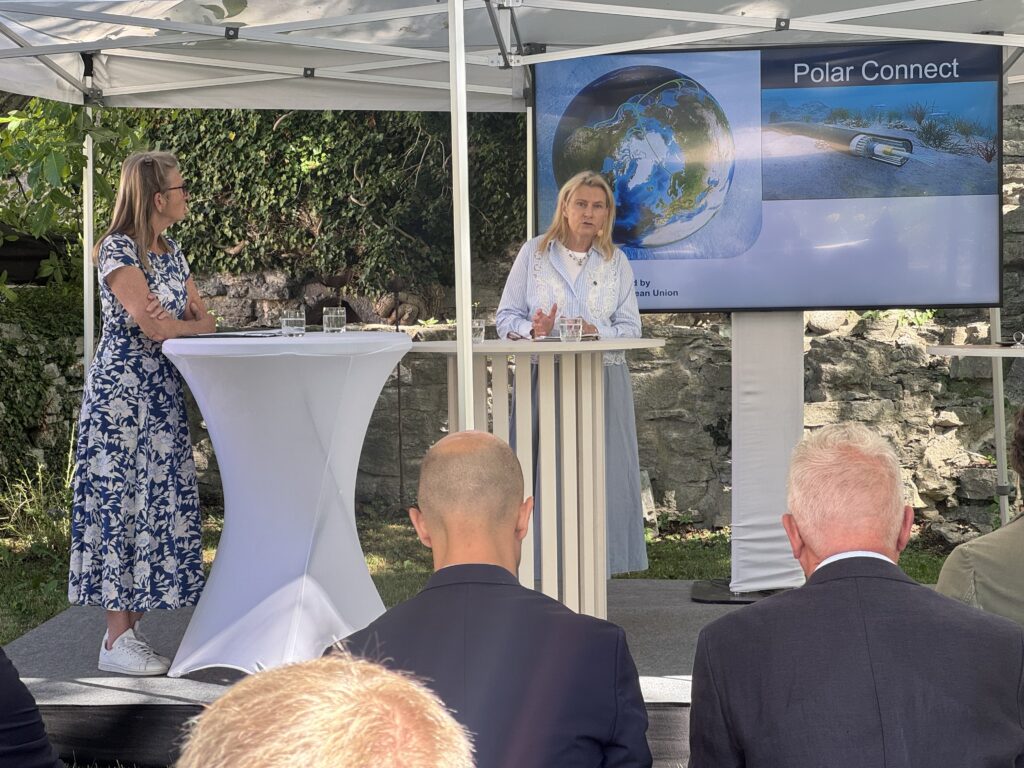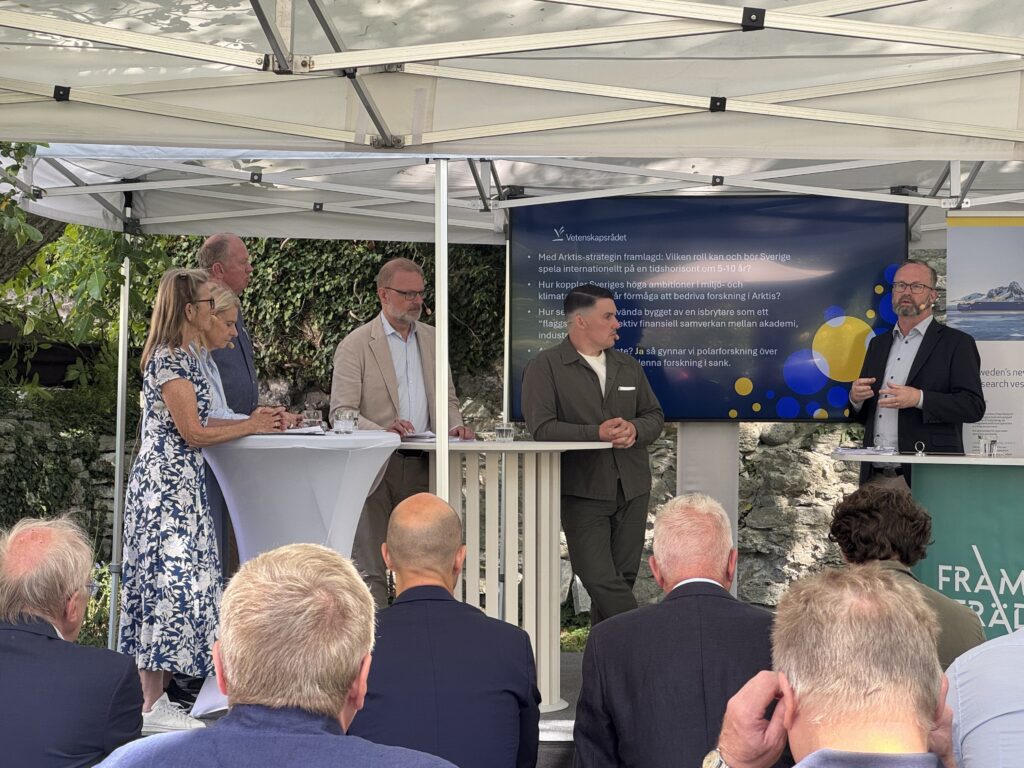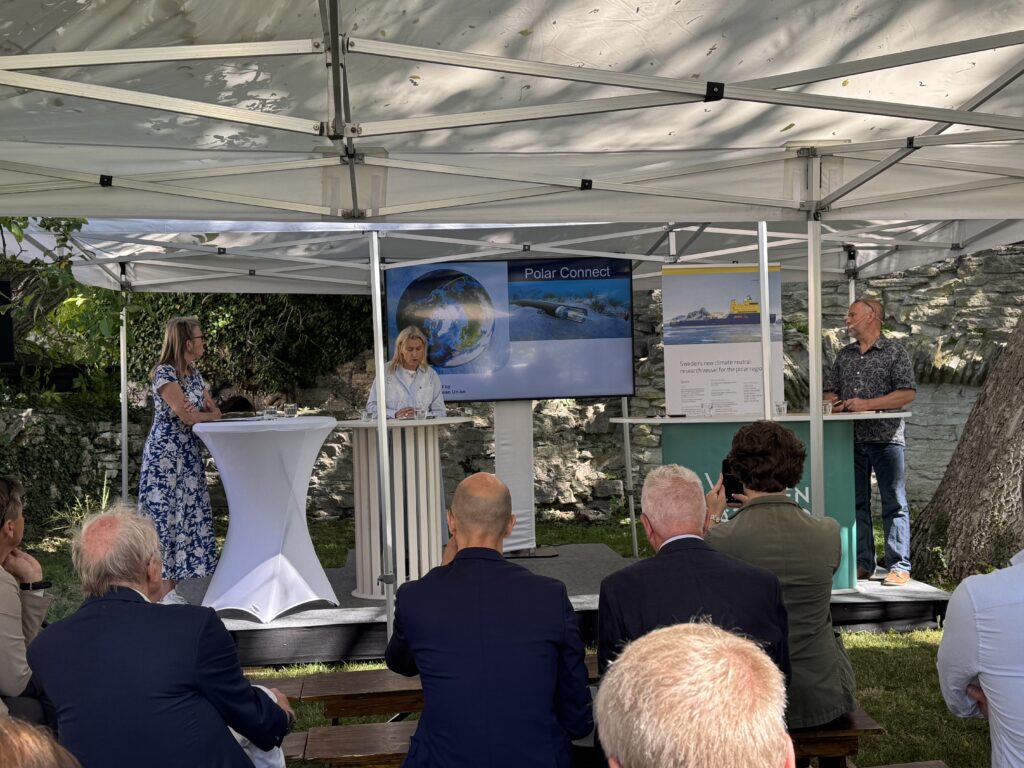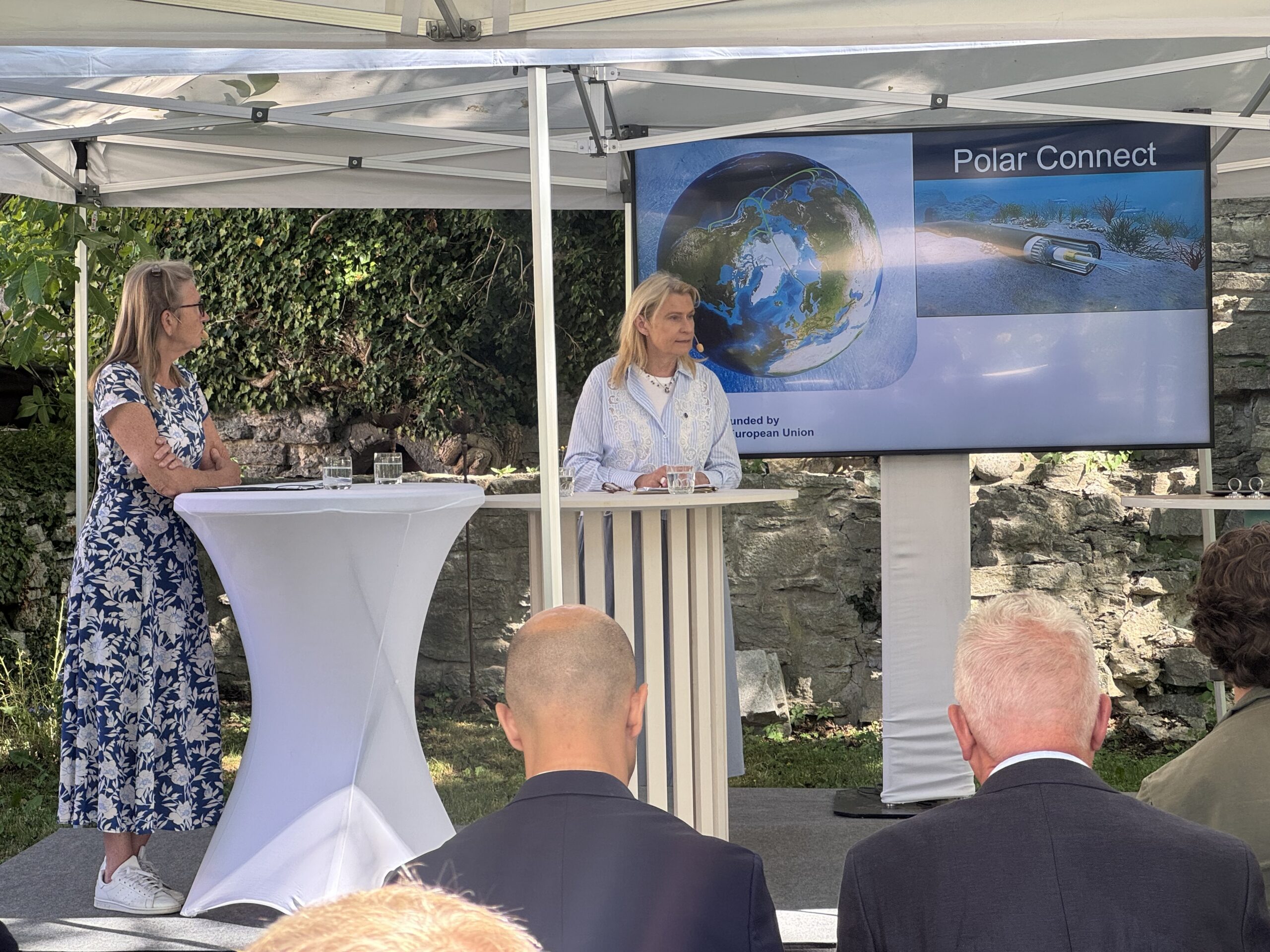
At today’s panel hosted by the Vetenskapsrådet / Swedish Research Council and the Swedish Polar Research Secretariat at Almedalen in Visby, Sweden, the discussion focused on what a new research icebreaker would mean for international collaboration, Arctic research and infrastructure initiatives like Polar Connect.
Europe has limited icebreaker capacity available for polar operations, particularly for year-round work in Arctic conditions. For initiatives such as Polar Connect, access to a heavy icebreaker is essential not only during cable deployment, but also for maintenance and repair operations, including in winter. Without that capability, operating critical infrastructure in the Arctic becomes significantly more challenging. As activity in the region increases, demand for suitable vessels is expected to grow for years to come.
Sweden’s research icebreaker Oden is approaching the end of its operational life as a platform for polar research. There is a significant global shortage of powerful icebreakers capable of operating in the Polar regions, which makes Oden a unique resource and its replacement an urgent question. The procurement of a successor is already prepared and the only thing missing is the decision on how to fund it – and production costs are likely to rise the longer decisions are delayed.
One thing was clear from the discussion: the window for action is closing, and the choices made now will shape what Arctic infrastructure looks like for decades.