🧊 Are you at TNC26 in Helsinki next week?
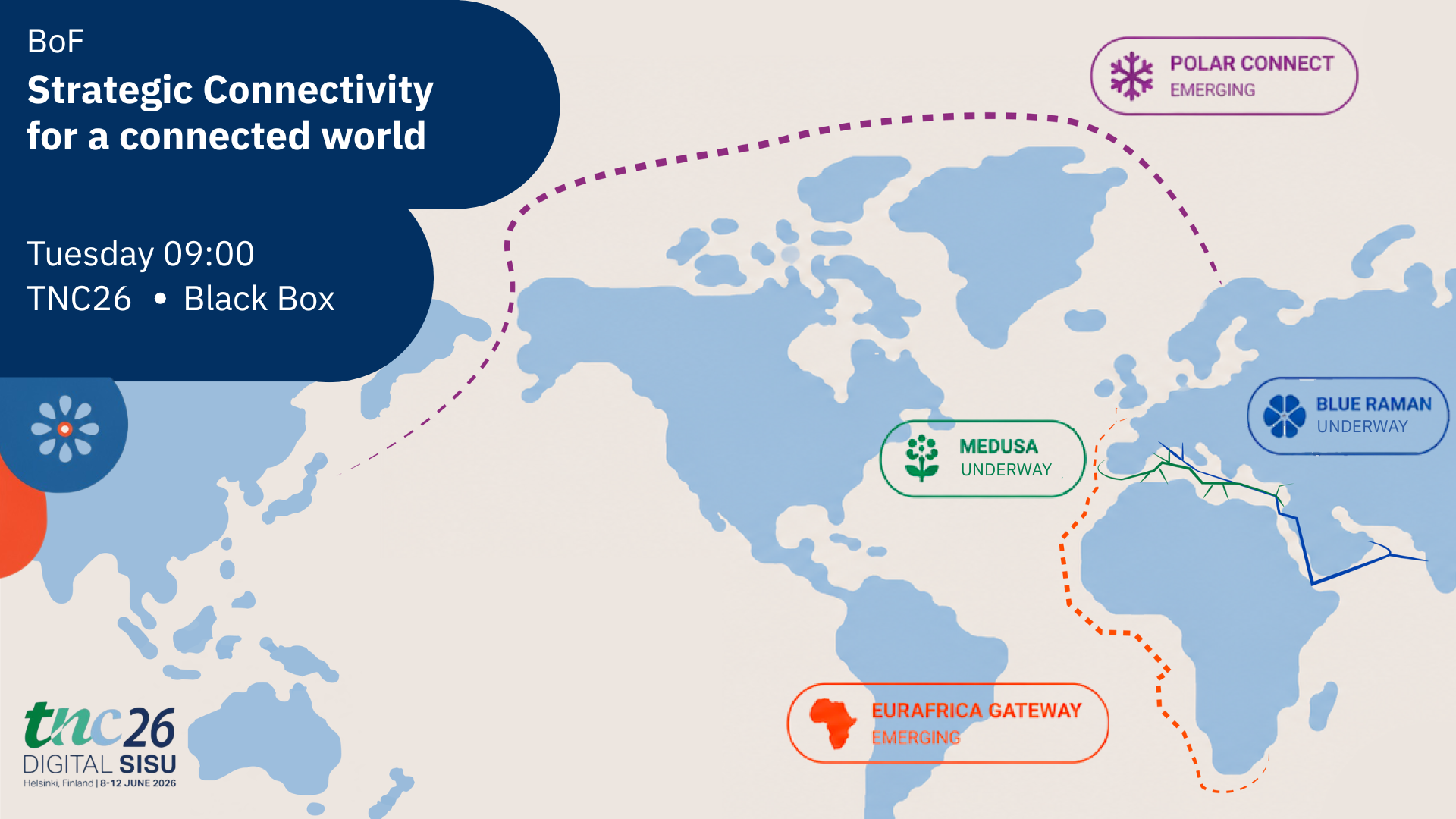
Come join us Tuesday morning, 9:00–10:30, for the Birds of a Feather session 𝗗𝗶𝗴𝗶𝘁𝗮𝗹 𝗚𝗹𝗼𝗯𝗮𝗹 𝗚𝗮𝘁𝗲𝘄𝗮𝘆: 𝗦𝗵𝗮𝗽𝗶𝗻𝗴 𝘁𝗵𝗲 𝗙𝘂𝘁𝘂𝗿𝗲 𝗼𝗳 𝗚𝗹𝗼𝗯𝗮𝗹 𝗥&𝗘 𝗖𝗼𝗻𝗻𝗲𝗰𝘁𝗶𝘃𝗶𝘁𝘆 – let’s talk about what it would mean to run the world’s first submarine cable through the Arctic Ocean.
We’ll be looking at Polar Connect in the context of the European Global Gateways, alongside cables like Blue Raman, Medusa, and emerging EurAfrica Gateway.
Lets explore what does it take for Europe to stop being an island in the digital ocean.
Right now, over 90% of Europe–Asia data traffic flows through the Suez Canal corridor. One region. One chokepoint. That’s a fragile foundation for a digital continent.
The Arctic route changes that math and the Polar Connect initiative is building the case for a sovereign, resilient, research-and-education-backed cable that takes Europe’s connectivity future seriously.
𝗧𝘂𝗲𝘀𝗱𝗮𝘆 · 𝟵:𝟬𝟬–𝟭𝟬:𝟯𝟬 · 𝗕𝗹𝗮𝗰𝗸 𝗕𝗼𝘅 · 𝗧𝗡𝗖𝟮𝟲 𝗛𝗲𝗹𝘀𝗶𝗻𝗸𝗶
—— Session description
Digital Global Gateway: Shaping the Future of Global R&E Connectivity
Chair: Helga Spitaler (GÉANT), Sabine JAUME-RAJAONIA (NORDUnet)
Intercontinental submarine connectivity infrastructure is entering a new strategic era. Projects such as Medusa and Blue Raman – alongside emerging opportunities such as Polar Connect and the EurAfrica Gateway – are no longer simply telecommunications investments; they sit at the intersection of geopolitics, digital sovereignty, scientific collaboration, socio-economic development and long-term resilience.
As the European Union advances initiatives under Global Gateway, fundamental questions are emerging: who shapes the future architecture of international connectivity, who benefits from it, and how can public-interest infrastructure remain open, trusted and sustainable in an increasingly competitive and fragmented global environment?
This panel brings together representatives from the European Commission, EU financing institutions, regional and national networking organisations (RRENs and NRENs) to discuss how strategic connectivity projects can deliver lasting value for research and education (R&E) communities not only across Europe, but globally.
The discussion will explore:
💠 how publicly supported infrastructure differs from commercially driven models,
💠 the growing influence of geopolitics and hyperscalers on global connectivity,
💠 how to ensure equitable partnerships with partner regions,
💠 the long-term sustainability of international connectivity investments and impact,
💠 the role the R&E community can play in shaping trusted and resilient global infrastructure from the outset.
Panellists:
Hoa-Binh Adjemian, Head of Unit, Private Sector Engagement, DG ENEST, European Commission
Jean-Francois Le Bihan, Project Manager, Secure Connectivity & Digital Infrastructure, DG INTPA, European Commission
Manuel Tarazona Cano, Senior Engineer, Digital Infrastructure Division, European Investment Bank (EIB)
Bram Peeters, Chief Network Services Officer, GÉANT
Ieva Muraškienė, Strategy and Policy Officer, NORDUnet & Chair of GÉANT Network Infrastructure Advisory Committee (NIAC) Madara Ogot, CEO, UbuntuNet Alliance